
-
The circuit breakers are all equipped with pure spring operang mechanisms which makes structure simple and highly reliable. The mechanical endurance for the operang mechanism is over 10000 mes, and it is convenient for maintenance and meets mechanism’s requirements for oil free and air free. It uses self-energy arc-exnguishing principle, and reduces operaon power of the mechanism and enhance operaonal reliability of product.
-
The flanges adopt dual-seal structural design, the outer seal ring is water-proof and inner seal ring is gas - proof. Therefore, it can reduce the leakage of the product greatly and makes the product more suitable for outdoor operaon.
-
tel: +86-13868438199
-
email: steven@boerstn.com
(1).png?x-oss-process=image/resize,w_200/quality,q_100)
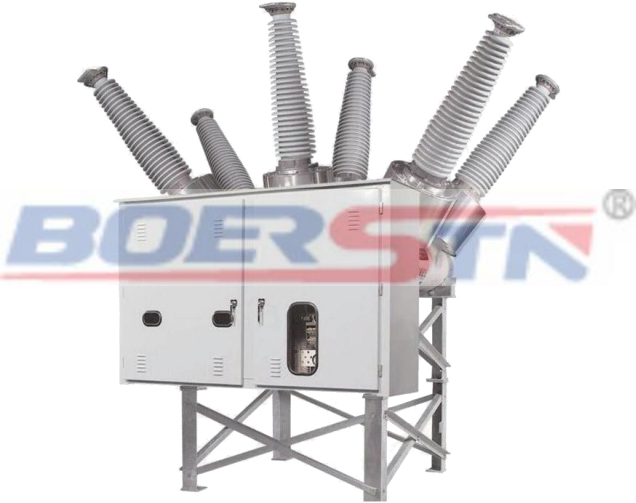
LW30-72.5~252KV Outdoor SF6 Dead Tank Circuit Breaker


LW30-72.5~252KV Outdoor SF6 Dead Tank Circuit Breaker
SF6 Gas Circuit-Breaker 72.5kV up to 252KV, 25kA~63kA, 1250A~4000A for Outdoor Three phase/Single phase Substation installation .Comply with IEC/ANSI standards Provided customized manufacture Accountable solution for safety and reliability Wide range offering, easy business and convenient installation .
description1
Zipper closure
1/4 zip athletic pullovers for men. Stretchy, lightweight, fast-drying
fabric for superior performance.
REGULAR FIT - US standard sizes. An athletic fit that sits close to the body
for a wide range of motion, designed for optimal performance and all day
comfort.
FEATURES - Quarter zip closure;Thumbholes on long sleeves to keep them in
place during workout
PRODUCT DETAILS
Dead tank type
SF6 Gas Circuit- Breaker
72.5kV up to 252KV, 25kA~63kA, 1250A~4000A for Outdoor
Three phase/Single phase
Substation installation
Comply with IEC/ANSI standards
Provided customized manufacture
Accountable solution for safety and reliability
Wide range offering, easy business and convenient installation
Main Technical Specifications
Service environment
-
1. Ambient temperature: -40 C ~ +55 C.
-
2. Daily average ambient air relave humidity ≤ 95%, on average ≤ 90%;
-
3. Wind pressure: less than 700pa.
-
4. Altude: less than 3000m.
-
5. Earthquake intensity: not more than 9 degrees.
-
6. Air Contaminaon: Ⅲ grade
Main technical parameters (three phase)
|
No. |
Descrip |
Technical parameters |
||||
|
1 |
Rated voltage, kV |
72.5 |
126 |
145 |
252 |
|
|
3 |
Rated frequency, Hz |
50/60 |
||||
|
4 |
Rated current, A |
1600~400 |
3150~4000 |
|||
|
1min Power frequency withstand voltage |
140 230 |
265 |
460 |
|||
|
Lightning impulse withstand voltage |
325 550 |
650 |
1050 |
|||
|
5 |
Rated short-circuit breaking current, kA |
25~40 |
40~63 |
|||
|
7 |
Rated short circuit breaking
current (peak), kA
|
63~100 |
100~157.5 |
|||
|
8 |
Rated short dura |
3 |
3 |
3 |
3 |
|
|
Rated out-of-phase breaking current |
10 |
10 |
10 |
10 |
||
|
Rated cable(line) charging
breaking current
|
10 |
31.5 |
50 |
125 |
||
|
Rated gas pressure, Mpa |
0.4 |
0.5 |
0.58 |
0.62 |
||
|
Opera |
O-0.3s-CO- 180s-CO |
|||||
|
Par |
10 pC |
5 pC |
||||
|
SF6 gas leakage rate (per year) |
≤ 1% |
|||||
|
14 |
First open pole factor |
1.5 |
1.55 |
1.5 |
1.3 |
|
|
Main loop resistance, μΩ |
≤40 |
≤45 |
≤45 |
≤50 |
||
|
Heater voltage |
AC220 |
|||||
|
Control circuit and signal circuit voltage |
DC110, DC220, DC230 |
|||||
|
Motor voltage |
DC220, DC230 |
|||||
 on
on on, s
on, s on sequence
Note: For short circuit breaking current & rated current is op onal by clients.
Main Unit
Structure
LW Series self-energy sulfur hexafluoride circuit breaker uses the principle of self-interrupter, greatly reducing the pressure cylinder diameter and weight, reduced operating power, making equipped with spring operating mechanism to become a reality.
Three single pole circuit breaker and each of the three mounted on the spring mechanism consisting of three stents, can be either unipolar operation, and can achieve three-pole electrical linkage. Spring mechanism mounted on the side of the bracket, electrical control system is placed inside the body. The upper part of the body is a single-pole circuit breaker interrupter single fracture, the middle pillar porcelain sets, the lower part is used for sealing, opening spring and buffer.
- Verification of degree of protection: IP55, IK10, wide temperature range (-40?~55?)
- Adopting integrated bending technique, artistic in appearance, high in strength and sound in impermeability
- The internal components adopt international famous brand, with reliable quantity.
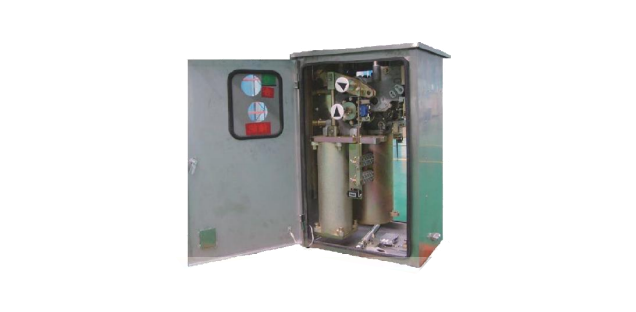
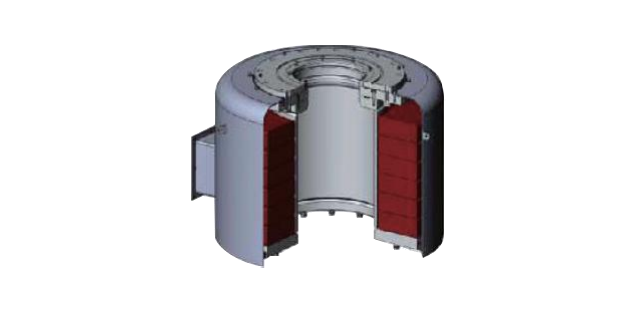
- The electromagnetic current transformer placed on the incoming and outgoing side of the circuit breaker, is located in different compartment from circuit breaker.
- The external coil structure is used, which is entirely cast with inside shell; and the outside is protected by rain cover; the outside of the coil adopts special waterproof structure to reach better moisture-proof effect.
- The secondary winding is cast with the saturated epoxy resin, with high electrical and mechanical strength and good heat resistance.
The circuit breaker works with the current mature self-energy technology principle. The energy required to break the short-circuit current, in part from the arc itself, reduces the energy of the operating mechanism. The circuit breaker transmission mode is three-phase mechanical linkage, which can effectively ensure the three- phase switching and synchronizing.
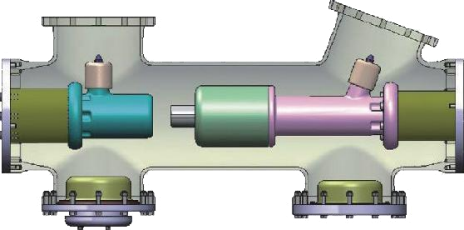
Figure 1 Opening position
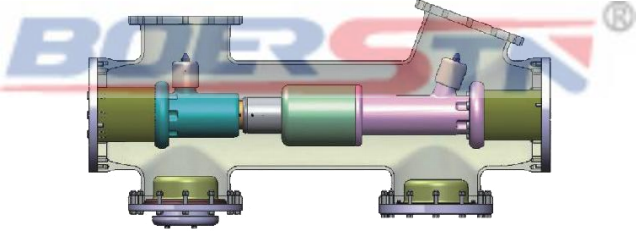
Figure 2 Closing position
Principle
High breaking current: Self-energy principle:
The arc combustion makes SF6 gas in the thermal expansion chamber fiercely expanding to generate gas flow blowing to nozzle to the nozzle to extinguish the arc.
Low breaking current: Puff type principle:
SF6 gas in the compression chamber is compressed to generate gas flow, blowing to the nozzle to extinguish the arc, which then extinguishes.
Basic research ability
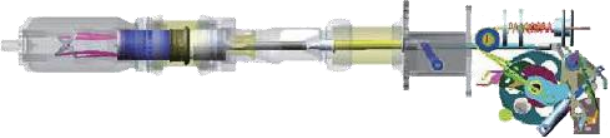
Simulation analysis of mechanism motion process of circuit breaker
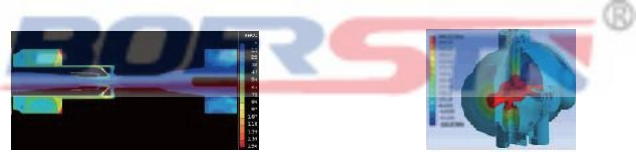
Flow field analysis 3D electric field analysis
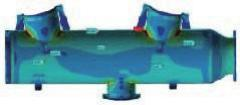
Enclosure mechanical strength analysis
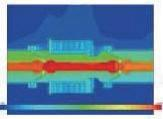
Temperature rise analysis
Related Products


Contact US
Product Information
Quantity
Unit
Piece
Support order samples, customization, wholesale direct, and complete payment. If the product you look for does not have corresponding customized content, pls fill out the form below to contact us, and we will reply ASAP.